Get in touch ...

Know of something happening in
Llangollen?
Tweet
us on
@llanblogger

E-mail your contributions to: llanblogger@gmail.com

We are on Facebook at https://www.facebook.com/pages/llanbloggercouk/139122552895186


Tuesday, February 15, 2022

All care workers should get £1,000 bonus, says boss

A social care leader is calling for an assurance that everybody working in the sector will receive a £1,000 bonus payment – even staff like cooks, care support workers and cleaners.

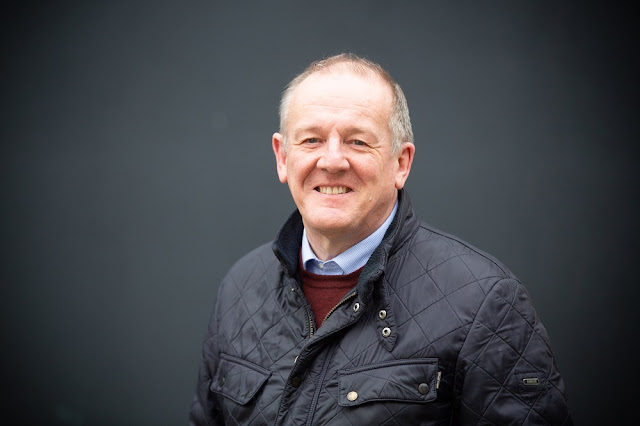
Mario Kreft MBE, the chair of Care Forum Wales (pictured), said the extra cash for front line social care workers announced by the Welsh Government was welcome in the midst of a dire staff shortage.

But he’s concerned that some ancillary staff might miss out.

Mr Kreft says that would be totally unfair when they too have played a vital role in keeping vulnerable people safe during the pandemic.

According to Deputy Health Minister Julie Morgan MS, the initiative is costing £96 million and the bonus will be aimed at some 53,000 people working in the sector.

It comes on top of the £43.2 million announced last December that’s designed to ensure social care workers receive the Real Living Wage from April onwards.

Care Forum Wales are concerned that all of this money might not reach the frontline because it is being channelled via local authorities and health boards.

Last year Mr Kreft was criticised by the Welsh Local Government Association for suggesting that asking councils to distribute social care funding to care homes and domiciliary care companies was like “putting a fox in charge of the henhouse”.

Some authorities were better than others in getting the cash to front line but in far too many cases, he said, care homes were still waiting for any extra money to reach them. 

Mr Kreft said: “We certainly welcome the £1,000 as a first step recruiting and retaining social care workers at a time when we are facing the worst staffing crisis anybody in the sector can remember.

“There is a much bigger issue about how we value social care worker and how we commission social care to ensure that our wonderful workforce receive the rewards that they deserve.

“We have been having weekly meetings with the Deputy Minister and we are grateful to her for her inclusive approach in involving Care Forum Wales in her deliberations.

“In relation to the £1,000, there is a question mark about those people who have slogged their guts out during the Covid nightmare, through all of the challenges, who may not be eligible.

“I am thinking of people who may have been dealing with infection control, catering and cleaning staff because they have all played an absolutely key role in keeping people safe.

“We really need to have clarity that these people are not going to be overlooked because there has been an astonishing commitment by the social care sector and social care workers in different settings come in all shapes and sizes.

“I hope there’s going to discretion in that guidance for employers to be able to ensure those  who have kept people safe and gone above and beyond during the pandemic are rewarded for those efforts.

“The key thing is that nobody gets overlooked because in Wales social care staff have made an astonishing contribution to the safety of vulnerable people.

“We need to make sure that social care family  benefits but I think that’s possible because I think the government understands the sector has made.

“The issue is quite different in terms of the £43 million that’s been set aside to pay people Real Living Wage from April.

“The delivery mechanism for that needs to be very carefully developed in partnership with the sector so that the guidance is such that local authorities and health boards will ensure it gets through to the front line so that our staff can actually receive the Real Living Wage.

“Care Forum Wales was very clear in 2020 when we launched our campaign for social care workers to receive an annual salary of at least £20,000.

“Every political party in Wales bought into that campaign and what now need to ensure is that we have the right mechanism so that local authorities have no wriggle room.

“We don’t want to see a repeat of the shambles last autumn when £41 million in recovery funding was given to local authorities because we Know that has been less than consistently allocated to the sector, as we warned would be the case at the time.

“Last October we felt the guidance was not strong enough or clear enough and we were criticised by the Welsh Local Government Association for daring to suggest that would be the case.

“In the event our concerns were proved to be wholly accurate. Surprise, surprise – many months later in February we see there are those local authorities, as we predicted, that there were some local authorities who did the right thing while others sat on the hands.

“We still have some local authorities in Wales that have not ensured that desperately needed money has got to the frontline as the Welsh Government intended.

“Some providers have still got the begging bowl out at a time when care homes are closing because of financial difficulties.

“Among the places we have lost is a greatly valued care home in Mold and that is a stark reminder we have to have a sustainable service and that people with complex needs can be cared for in their own community and they don’t have to remain in hospital so the NHS can concentrate on what it’s best at.

“That is why we have to ensure the new guidance for the Real Living Wage is worked on and co-produced in partnership with all parties so we have an effective  mechanism for distributing funding in the right way.

“This is surely the beginning of a more consistent national approach instead of the postcode lottery of having 22 local authorities and seven health boards doing things differently.

“Last October I said that allocating the funding via local government was tantamount to putting a fox in charge of the henhouse and sadly what I feared has now come to pass. It hasn’t been consistently applied and there are cases where the money has not got to the front line.

“It’s therefore vital that we learn the lessons and we approach this issue in partnership so that we do not repeat the same mistakes.

“We need to see social care workers as a value not a cost to our society and our country.”

Monday, February 14, 2022

Tributes to Welsh Language Commissioner from Clwyd South politicians


* Welsh Language Commissioner Aled Roberts.

Clwyd South politicians, past and present, have paid tribute to the Welsh Language Commissioner Aled Roberts who has died at the age of 59.

The former Welsh Liberal Democrat Assembly Member, from Rhosllannerchrugog, passed away yesterday following an illness.

In his role as Commissioner he fought for the rights of Welsh speakers and to promote and facilitate the use of the Welsh language.

He graduated with a law degree at the University of Aberystwyth in 1983, and he later went on to practice as a solicitor.

His career in politics began when he was first elected to Wrexham County Borough Council in 1991 for the Rhos and Ponciau Ward. In 2003 he became Mayor of Wrexham and the following year was voted in as Leader of the council.

In the 2011 election for the then National Assembly for Wales, he was elected as a Liberal Democrat Assembly Member for North Wales, going on to become the party’s spokesperson for Children and Young People and for the Welsh language. In the 2016 Assembly election his North Wales regional seat was captured by UKIP.

In April 2019 he was appointed by the Welsh Government to the role of Welsh Language Commissioner, succeeding Meri Huws in the post.

He was also very active within his local community, and has been a member of the Stiwt Arts Community Centre committee since it was established in the 1980s.

Tributes have been comping in throughout the day including those from Clwyd South Senedd Member Ken Skates and former MP for Clwyd South, Susan Elan Jones.

Ken Skates described his former colleague in the Senedd as a ‘true champion for the people and places of our region and nation.’

He said: "Aled was a gentleman, a brilliant and professional public servant, a true champion for the people of this area and Wales.

"He was always good company to have and was utterly dependable. He believed passionately in his home community of Rhos and the wider area of Wrexham County Borough, serving our communities with understanding and full commitment.

"We’ve lost a rare type of politician in Aled – someone who was always polite, compassionate and empathetic at all times. He will be missed by so many people, across the political divide."

Former MP for Clwyd South, Susan Elan Jones, also grew up in Rhosllannerchrugog and said the community would be united in sadness. 

She added: "He was an exemplary public servant, who served his home community and the people of Wales with great dedication.

"He was also a brilliant Welsh Language Commissioner. We will remember in our thoughts Llinos and the rest of Aled’s family, his friends at the Stiwt, and his many friends across a large number of organisations that he was involved in."

Llangollen's zumba ladies celebrate City of Culture bid

Energetic members of the weekly zumba classes run by Julie Kirk Thomas at Llangollen Town Hall were special guests at the Ty Pawb centre in Wrexham on Saturday afternoon.

Led by Julie, they performed a demonstration routine as part of a special programme of entertainment celebrating Wrexham's bid to become UK City of Culture 2025 and were warmly received by the audience who gathered in the food court. 

Sunday, February 13, 2022

Welsh Government to consult on tourism tax

The Welsh Government has confirmed a consultation on proposals for a local visitor levy will launch this autumn.

Rebecca Evans, Minister for Finance and Local Government, said a levy would enable destinations in Wales to be enjoyed for generations to come.

Tourism provides a substantial economic contribution to Wales with tourism-related expenditure reaching more than £5bn annually in 2019. 

The government believes that a tourism tax would raise revenue for local authorities enabling them to manage services and infrastructure which makes tourism a success.

The Welsh Government’s Programme for Government, and the Cooperation Agreement between the Welsh Government and Plaid Cymru, both contain commitments to introduce levies.

Formal consultation on draft legislative proposals for a visitor levy will launch in the autumn, providing a platform for a range of views to be considered.

Rebecca Evans said: "Visitor levies are a common feature in tourist destinations internationally. They are an opportunity for visitors to make an investment in local infrastructure and services, which in turn make tourism a success. 

"Without such a levy, local communities face an undue burden to fund local services and provisions on which tourists rely. From keeping the beaches and pavements clean, through to maintaining local parks, toilets and footpaths – the critical infrastructure that supports tourism should be supported by all those that rely on it.

"The introduction and subsequent use of such a levy would enable destinations in Wales to be enjoyed for generations to come and encourage a more sustainable approach to tourism.

"The levy would be proportionate by design, and powers to raise the levy would be discretionary for local authorities. This would enable decisions to be taken locally, according to the needs of our communities. 

"The levy will apply to those paying to stay overnight within a local authority area. Opportunities for wider contributions on the cost impact of other types of visitor activities on local infrastructure will be offered as part of the consultation on the levy."

Designated Member Cefin Campbell MS said: "Giving local people the power to introduce a tourism levy will make a difference to communities across the country, many of which attract a significant number of tourists. It will give local people and their representatives more power and resources to invest and deliver in their areas.

"Councils will be able to ask tourists to contribute in a small way to the areas they are visiting and the local services they use.

"This measure will help support a sustainable rather than an extractive tourism sector, which will help bring the greatest benefit to communities and the local economy.

"Such levies – often known as tourism taxes – are commonplace in countries across Europe and beyond. This is about mutual respect between our communities and the visitors they welcome. It is a new policy which is the fruit of a Welsh co-operative spirit."

Saturday, February 12, 2022

Work planned for next week on 2020 project

Work planned for week starting Monday, February 14 on the Llangollen 2020 project is:

*Pave Castle Street east

* Sunday to Thursday: night works from Parade Street heading north to Dee Lane (affected properties have received letters with more information).

Trains return to Llangollen Railway in time for half term


It's now just a week before trains return to Llangollen Railway in time for the half term holiday starting on Saturday, February 19.

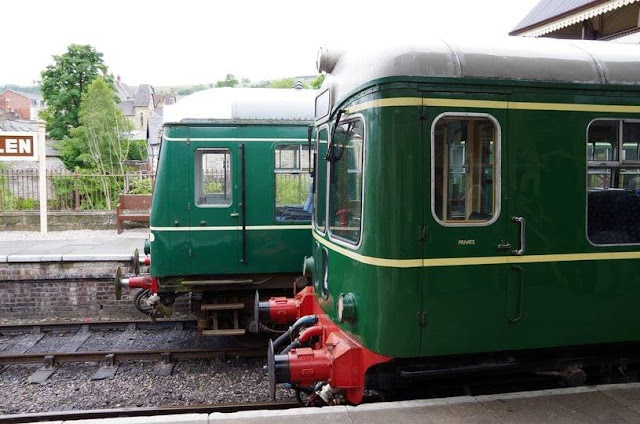
A two-train heritage diesel railcar service will be in operation on the weekends of 19th & 20th and 26th & 27th of February when Timetable B is to operate with trains leaving Llangollen for Carrog at 1030am, 1200 noon, 1.00pm, 2.30pm and 3.15pm.

A one-train railcar service will run on Wednesday 23rd to Friday 25th February. Timetable A operates with departures at 11am, 12,50 pm and 3.10pm.

Units expected to be in use are the Class 108/104 hybrid set and the unique Class 109 Wickham set, the latter following a major engine repair. All date from the late 1950s and show how trains used to be in British Railways days when operated on branch lines. 

Riding the railcar offers the best views of the Dee Valley in the late winter season when the results of wintertime maintenance work might be seen to advantage. 

The trains also offer the opportunity to enjoy recreational visits to the Area of Outstanding Natural Beauty with many short walks, or longer from the stations at Berwyn, Glyndyfrdwy and Carrog. 

According to Llangollen Railway Unofficial Facebook page, the platform at Deeside is being demolished.

The facility, which dates from 1990, has become unstable and following the removal of the points which formed the loop, the platform is no longer required. 

Re-sleepering of six panels of track west of Deeside has also taken place during early February as shown on LR Facebook page.

One noticeable change for the start of the new season is that passing of trains must now take place at Glyndyfrdwy.

Friday, February 11, 2022

Wales to gradually relax Covid rules, says Drakeford

Wales will gradually begin to relax some of its remaining coronavirus protections as cases continue to fall, First Minister Mark Drakeford (pictured) announced today.

From 18 February the legal requirement to show a COVID Pass to enter certain venues and events will be lifted and from 28 February face coverings will no longer need to be worn in all indoor public places.

The changes will be confirmed today, following the first three-week review of Wales’ alert level zero measures.

The latest results from the ONS Coronavirus Infection Survey suggest levels of infection have recently fallen, but community transmission rates remain relatively high in all parts of Wales.

First Minister Mark Drakeford said: "With increasing numbers of people vaccinated and boosted and thanks to the hard work and efforts of everyone across Wales, we are confident that coronavirus rates are falling and we can look forward to brighter times ahead.

"We can start to gradually and carefully remove some of the remaining protections we have in place at alert level zero. But we are not removing all the measures at once because the pandemic is not over yet.

"To keep Wales safe we need to remain cautious and do everything we can to reassure those who feel most at risk. We will keep some important protections in place, including face coverings in health and social care settings, on public transport and in all shops. We will also keep self-isolation rules in place.

"Next month, we will publish a plan setting out how we will move beyond alert level zero and the emergency footing on which we have been operating for nearly two years. This will help us all to make some plans for the future.

"From Friday 18 February, the domestic COVID Pass will no longer be required for entry into indoor or outdoor events and venues, including nightclubs, cinemas, theatres and concert halls. But events and venues will be able to continue to use it if they choose to.

"The international COVID Pass will continue to be integral to arrangements for safer international travel. Travellers will need to check the relevant countries’ rules for entry, including any different requirements for children.

"From Monday 28 February, the requirement to wear face coverings will be removed from most indoor public places, apart from in retail, public transport and health and care settings.

"If the public health conditions continue to improve, the legal requirement to wear face coverings in all remaining settings could be lifted by the end of March.

"Schools will return to using their local decision framework from 28 February and from 11 February the guidance will be updated to make it clear adults can remove their face coverings when they are interacting with babies and small children at baby and toddler groups.

"The next three-weekly review of the coronavirus regulations will be carried out by 3 March, when the remaining measures at alert level zero will be reviewed."